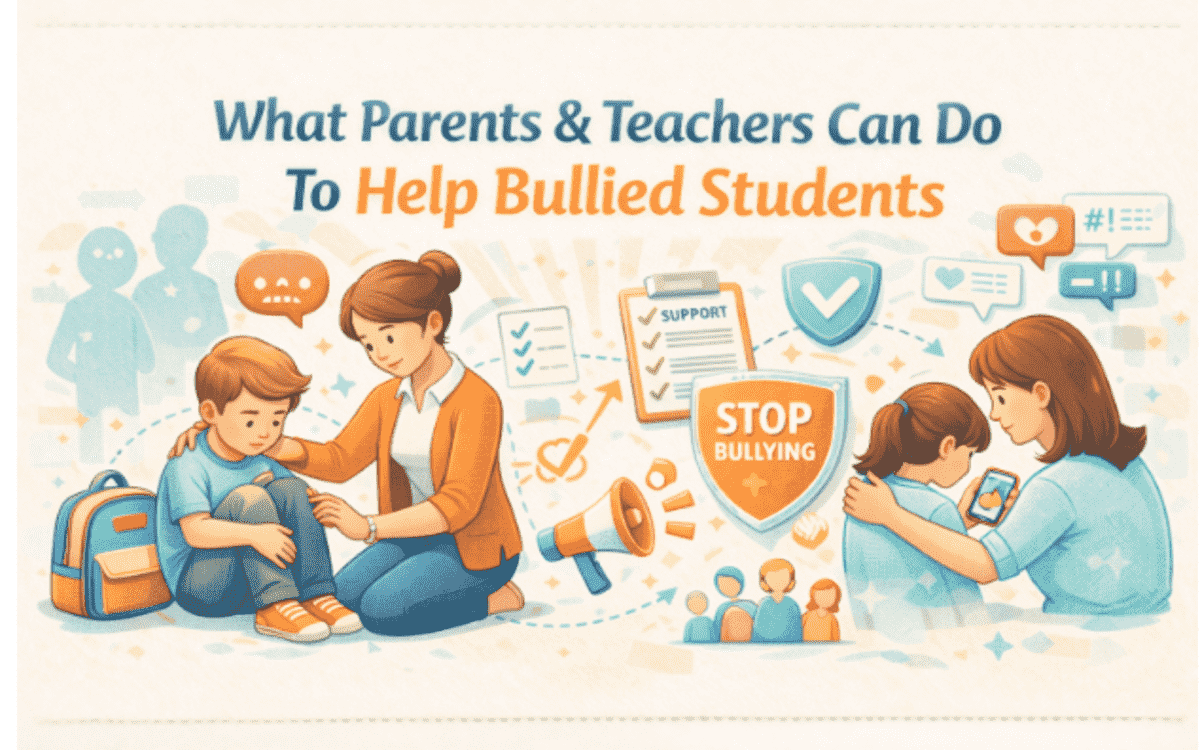
Did you know that 1 out of 4 kids gets bullied in school?
Bullying has been an issue for ages. Children who are bullied face serious circumstances in life.
From academic performance, emotional well-being to overall development, bullying affects everything.
The truth is, if not addressed properly, this issue can often leave hidden scars that traumatise one person for life.
So if you are a parent or a teacher, you know you have the power to heal and support affected students.
While it may be difficult at first, you can create a safe and nurturing environment for these students.
Keep ready to discover the practical insights and strategies for helping students facing bullying issues cope with this situation.
Understanding Bullying And Its Influence
Bullying is an intentional behaviour and is found in various forms. From physical, verbal, and social bullying to online bullying, many children suffer in different ways.
While physical bullying is often seen more, online bullying, known as cyberbullying, also brings long-term challenges for a child.
The most common effects of bullying that are seen in children include:
- Anxiety
- Depression
- Low self-esteem
- Withdrawal from activities
- Hopelessness
- Stomach aches
- Fatigue
- Poor concentration
In such circumstances, a student might struggle to focus on their coursework. This is where professional nursing assignment help in Ireland can help them.
How To Recognise The Signs Of Bullying
Bullying can have serious impacts in the longer term. If not identified on time, a child who gets bullied might encounter suicidal thoughts and even fall into the risks of self-harm. Moreover, many children hesitate when speaking about getting bullied.
They fear the embarrassment associated with it and also feel weird that someone might make fun of them.
So if you are a parent or a teacher, make sure to stay alert regarding the following signs.
| Mood changes | Sudden mood changes are witnessed, such as anger, sadness, and anxiousness. |
| Withdrawal | A child might lose interest in their everyday hobbies and avoid people around them. |
| Self-esteem | They might start losing confidence and feel helpless. |
| Injuries | Unexplained bruises, cuts, or scratches after school hours. |
| Academic | Failing grades, disinterest in academics, and loss of focus. |
| Sleeping issue | Difficulty in sleeping or experiencing frequent nightmares. |
| Eating habits | A child might start binge eating or even skip their meals. |
Analysing and treating these signs early is necessary for eliminating the chances of serious consequences.
How Parents Can Support Their Children
Parents are the children’s strongest support. You are the closest to them, and you need to ensure that your child feels the safest with you. When you discover the signs of bullying, it is important to stay calm and deliver a gentle response.
Here is how you can support those students facing bullying issues:
- Communicate With Them
Start by creating a safe space for communication. Your child needs to know that you are not going to judge them. This will allow them to share their experience without any shyness. Just keep reminding them their feelings are valid and you are here to listen to them!
- Don’t Overreact
Feeling angry or upset is common during this time. Especially when your child has gone through a lot, and you can’t do anything about it.
However, you don’t need to lose your control. Stay calm and understand the scenario without starting to blame others instantly.
- Teach Them Skills
Problem-solving, conflict resolution and communication are some essential skills that can help with building self-esteem.
Both parents and teachers should focus on helping children learn and implement those skills in real-life scenarios. This helps them with handling and navigating difficult situations.
- Keep Record Of Issue
Documenting the details your child shared is beneficial in the long run. When you remember dates and descriptions, you can easily discuss them with the teachers or school staff. This helps in addressing the issue more effectively.
- Stay Connected With The Teachers
According to research, the majority of bullying occurs in schools, especially in unsupervised areas. Make sure to communicate and engage with teachers to monitor your child’s presence and their activities.
Pro tip: A child who got bullied might face intense academic workloads. They might miss their important projects, such as Ireland essay writing. In such circumstances, you should always hire someone offering professional writing services for essays and other academic papers.
Read Also: Sober Living Homes: Rules and Regulations
How Teachers Can Address Bullying
With a strong focus on student behaviours, teachers can intervene the bullying situations more effectively.
Here is how:
- Create A Respectful Classroom Culture
One of the most important considerations. Discuss the behavioural expectations in the classroom and promote empathy. You need to tell students that bullying is an extreme form of disrespect and it won’t be tolerated.
- Tell Students To Report Immediately
You need to focus on creating an environment where students facing bullying issues, either a victim or a witness, will feel safe while reporting all the incidents.
- Intervene Quickly
Ignoring or waiting for things to work out is the worst thing you could ever do. As a teacher, you should focus on addressing incidents calmly and immediately.
- Monitor High Risk Areas
Taking action against a bully isn’t enough. You need to follow up to ensure that the behaviour stops right on time.
Don’t forget to track the most common locations of bullying, including classrooms, hallways, school grounds, and school bathrooms.
- Collaborate With Parents
Regular communication with parents is necessary to get a better view of a child’s behaviour.
FAQS
Ques 1) How can parents help students facing cyberbullying?
Ans) Alongside traditional bullying, digital bullying has seen a massive spread as well. As a parent, you can handle this situation by monitoring your child’s online activity, educating them about responsible online practices, and teaching them how to report harmful content.
Ques 2) How can teachers help students who are facing cyberbullying issues?
Ans) Teachers can help students manage the issue of cyberbullying by incorporating digital citizenship education, discussing the red flags of online interactions with students, and encouraging witnesses to support the victim in these crucial times.
Ques 3) Is professional help necessary for students facing bullying issues?
Ans) No! With the right approach, parents and teachers can easily help a child navigate this challenging situation. However, if signs of anxiety, depression, or trauma due to severe emotional distress, professional help to help students regain their confidence.
Wrapping Up
Students facing bullying issues is an extremely sensitive issue that comes with a list of effects on a child. Strong cooperation between parents and teachers is required to recognise signs at early stages, respond effectively, and make a student feel heard and valued. With th