Tata Motors covers a wide spread of Indian buyer needs, from compact hatchbacks and urban SUVs to electric crossovers and larger family vehicles. The useful shortlist depends less on brand-wide popularity and more on seating, running pattern, charging access, safety priorities and budget.
Choose by use case, not by badge
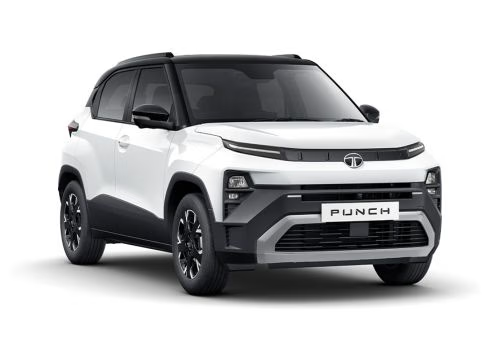
The Tiago suits buyers who want a compact city car with manageable dimensions. The Altroz appeals to those who prefer a wider hatchback and a more planted highway feel. The Punch adds a higher seating position without moving into a much larger footprint, while the Nexon offers broader powertrain and equipment choices.
Families needing more space can examine the Curvv, Harrier and Safari. The Curvv brings coupe-SUV styling and both combustion and electric choices. The Harrier focuses on five-seat space and road presence, while the Safari adds a third row for households that regularly carry more passengers.
Tata choices at a glance
The table below is a use-case guide rather than a ranking. Prices and variants can change, so buyers should verify the current range before booking.
| Buyer requirement | Tata models to examine | Reason to consider |
| Compact city use | Tiago, Punch | Easy dimensions and lower entry cost |
| Premium hatchback | Altroz | Wide cabin and stable road manners |
| Compact SUV flexibility | Nexon | Multiple fuels and broad variant spread |
| Style and longer trips | Curvv, Curvv EV | Distinct design with ICE and EV options |
| Large five-seat SUV | Harrier | Space, road presence and features |
| Three-row family travel | Safari | Additional seating flexibility |
Where Tata electric cars fit
The Tiago EV is an urban-focused entry point, while the Punch EV adds a more SUV-like body and flexible battery options. The Nexon EV balances family practicality and wider trip capability. The Curvv EV offers longer certified range and a more premium cabin, while the Harrier EV targets buyers seeking greater size and performance.
Charging access should be treated as a core ownership condition. Home charging usually makes an EV much easier to live with. Apartment residents should confirm sanctioned load, parking access and society approval before committing.
Safety and ownership checks that matter
Tata cars has built a strong safety-led reputation, but ratings apply to specific tested models and protocols. Buyers should still check airbags, electronic stability control, tyre-pressure monitoring, child-seat mounts and braking equipment on the exact variant. A high rating does not replace safe driving, correct tyre maintenance or proper child-seat use.
- Verify the safety equipment on the chosen variant.
- Check service reach near home and regular travel routes.
- Compare real boot space with family luggage.
- Review insurance and tyre replacement costs.
Build a shortlist for Indian roads
A test drive should cover broken surfaces, speed breakers, tight U-turns and the kind of traffic encountered daily. Rear-seat comfort, ingress, boot usability and visibility often matter more over years of ownership than a feature that impresses for a few minutes in the showroom.
The practical decision
For city-first use, Tiago and Punch remain logical starting points. For mixed city and highway travel, Altroz, Nexon and Curvv deserve comparison. Larger families can look at Harrier or Safari, while EV buyers should choose according to charging access and realistic range needs. The strongest Tata Safari choice is the model that solves a defined mobility problem without forcing the household to pay for size or capability it rarely uses.
Questions that narrow the Tata shortlist
Before finalising this topic, verify the latest manufacturer brochure, the exact variant specification and the local dealer quotation. A short test drive should reproduce the buyer’s normal roads rather than a smooth demonstration loop. This helps reveal visibility, ride quality, control effort and cabin comfort that cannot be understood from a specification sheet alone.
Ownership quality also depends on factors outside the headline figure. Insurance coverage, tyre replacement, scheduled service, warranty exclusions and resale expectations can change the overall value. Recording these items beside the purchase price creates a more complete comparison and reduces the chance of choosing which tata options are worth considering for your next car? on one attractive number alone.
Match Tata powertrains to annual running
Powertrain selection can change the ownership experience more than a trim upgrade. A petrol car generally works well for moderate annual distance and short journeys. Diesel becomes attractive when long highway runs are frequent. CNG can reduce fuel cost but requires convenient filling access. Electric versions reward owners who can charge at home and keep most trips within a predictable range envelope.
Resale should be treated as one factor, not the decision itself. Fuel regulations, battery prices and buyer preferences can change over a five-to-eight-year ownership period. The stronger approach is to choose the powertrain that saves time and money during the years the household actually uses the car.
Tata’s wide portfolio also means buyers can compare two body styles without leaving the brand. Someone considering a top Punch may also examine an entry Nexon, while a high Nexon variant may overlap with the Curvv. Comparing these crossover points prevents paying for a feature-rich smaller car when a larger basic model serves the family better.
Compare overlapping Tata variants
The final decision should be documented in one page: the chosen configuration, the strongest reason for buying it, the main compromise and the expected annual cost. Writing these points down helps separate a durable need from showroom excitement. It also makes later comparisons more consistent because every alternative is judged against the same household priorities rather than a changing list of impressions.