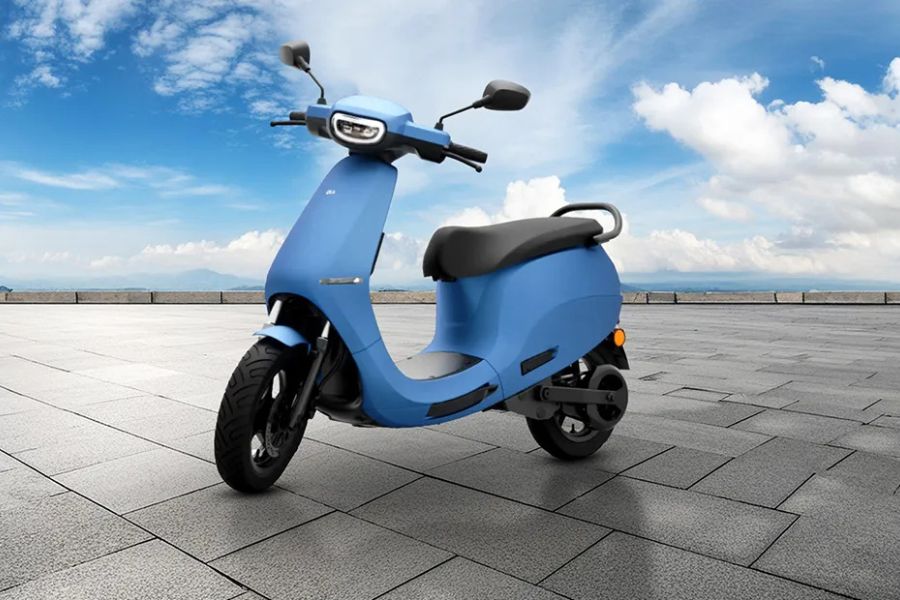
For most Indian buyers, the best electric scooter in India is not automatically the one with the highest advertised range. It is the scooter that completes everyday journeys, recharges where the owner parks and remains affordable once the full purchase and service costs are considered. The right shortlist may look different for a flat city commute and a hilly suburban route.
Work backwards from your actual daily distance
Start with a week of realistic travel. Include the office commute, grocery stops, school pickups, unexpected detours and occasional longer weekend rides. A person covering 20 km daily does not necessarily need the battery size required by someone riding 85 km with few charging opportunities. Leave a comfortable reserve rather than planning to reach home with almost no charge.
Comparing the best electric scooter in India, catalogue figures are useful for evaluating different variants, but they are not fixed promises. Speed, passenger weight, road gradients, temperature and riding mode affect the distance achieved. Ask dealers which range certification the quoted figure represents, and compare it with independent rider reports for the same variant.
Battery size should follow charging access
A larger battery often raises the purchase price and may increase the time needed for a complete charge. Home charging is convenient only if the parking spot has a safe electrical connection and adequate permissions. A resident in a rented apartment should confirm charging arrangements before placing a deposit, not after delivery.
Fast-charging availability varies by brand and city. Check whether the nearest charger is compatible, operational and accessible when needed. Also check whether the manufacturer includes a portable charger or charges extra for the equipment. A small scooter battery can be perfectly adequate when it is reliably replenished overnight.
Compare current models on comparable figures
The Ola S1 Pro 3 kWh is listed by BikeWale with a 176 km riding range, while the Ather 450X 2.9 kWh is listed at 126 km. The Vida V2 Plus, with a 3.44 kWh removable-battery arrangement, is listed at 143 km. These are manufacturer-linked figures shown in product listings; they represent different test conditions and should not be interpreted as a single controlled road test.
| Scooter and version | Listed battery capacity | Listed range |
|---|---|---|
| Ola S1 Pro | 3 kWh | 176 km |
| Ather 450X | 2.9 kWh | 126 km |
| Vida V2 Plus | 3.44 kWh | 143 km |
The Vida V2 is an example of a different ownership approach because its removable batteries may help riders without a convenient fixed charger at the parking spot. However, carrying a battery upstairs or storing it safely must be evaluated in person; portability is not automatically effortless.
Understand the entire price, not just the headline
An ex-showroom price is a useful comparison starting point, but the delivery bill may contain insurance, applicable registration charges, accessories and other permitted fees. Subsidy eligibility, where offered, must be checked against current rules and the exact scooter variant. Avoid assuming a promotional price shown online will remain valid after stock or eligibility changes.
If borrowing, compare the down payment, financed amount, annual interest rate, processing fee, tenure and total repayment. A lower EMI produced by a longer term can increase the interest paid. Buyers should evaluate whether the monthly payment leaves money available for household essentials and occasional repairs.
Test ride comfort and technical convenience
Try the scooter on broken roads, narrow lanes and a short open stretch. Evaluate brake feel, suspension response, turning radius and the effort needed to park it. The dashboard should be readable in harsh sunlight, while the controls should be easy to operate with gloves. A prospective owner who regularly carries shopping should also test under-seat storage and footboard space.
Connected features deserve scrutiny. Navigation, phone pairing and remote alerts are useful only when they work consistently. Ask whether any software feature requires a paid package, whether updates are supported and which functions remain available without a network connection.
Battery warranty and local support matter
The battery is among the most expensive scooter components. Read the warranty document for years, distance, capacity-retention thresholds and exclusions. Ask how claims are handled, where inspections take place and whether replacement components are locally available. The nearest authorised workshop should be realistically accessible from home or work.
Resale values for electric scooters are still developing and depend on battery health, software support and brand confidence. Keep service records, charging equipment and warranty documents together. These may matter more at resale than an unusual paint scheme or a feature the next buyer rarely uses.
Plan for more than a typical weekday
A sensible electric scooter shortlist should also accommodate occasional changes to your schedule. Imagine travelling directly from work to a medical appointment or making an unexpected family visit. Estimate how much charge would remain after such a detour, including the trip back. If the reserve looks uncomfortably small, consider a different battery version rather than trusting a catalogue figure alone.
Charging safety is part of that calculation. Avoid makeshift extension cables across shared walkways and ask a qualified electrician to assess the socket or circuit where necessary. Keep the charger dry, follow the manufacturer’s instructions and avoid charging equipment with damaged plugs or cables. The cheapest installation is not always the safest one.
Record which nearby charging stations accept your preferred model and check whether their access hours match your workday and weekend travel plans.
Choose a scooter you can recharge and maintain
Shortlist two or three models that meet your daily distance with a sensible reserve. Test the precise battery version, verify charging compatibility, compare written delivery quotations and confirm after-sales arrangements. A slightly lower claimed range can be a sensible trade-off for better everyday convenience and a clearer ownership budget.